BuiltFirst 3D / Work / Pumpjack
Pumpjack, exploded view and downhole cutaway
What it is
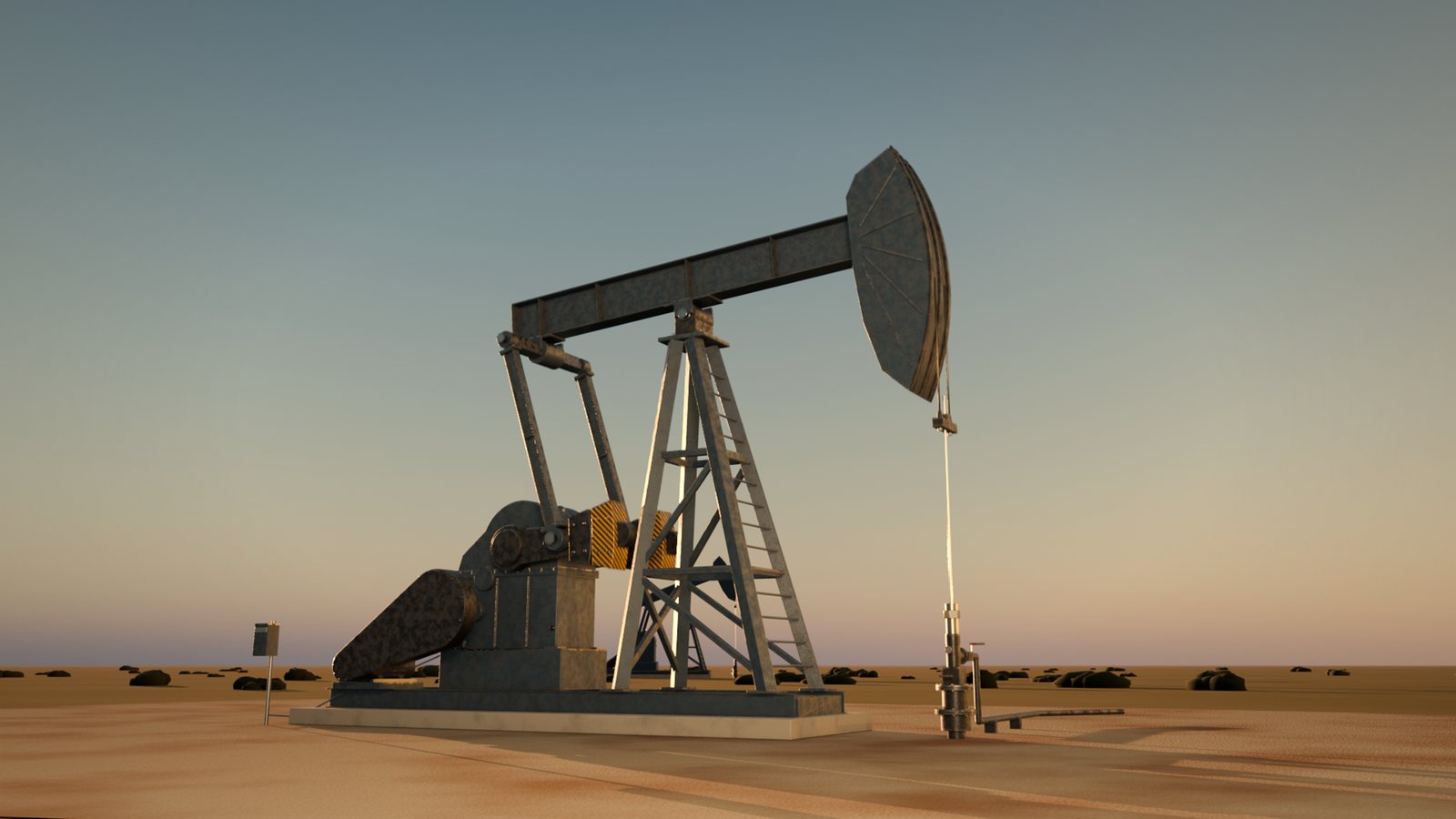
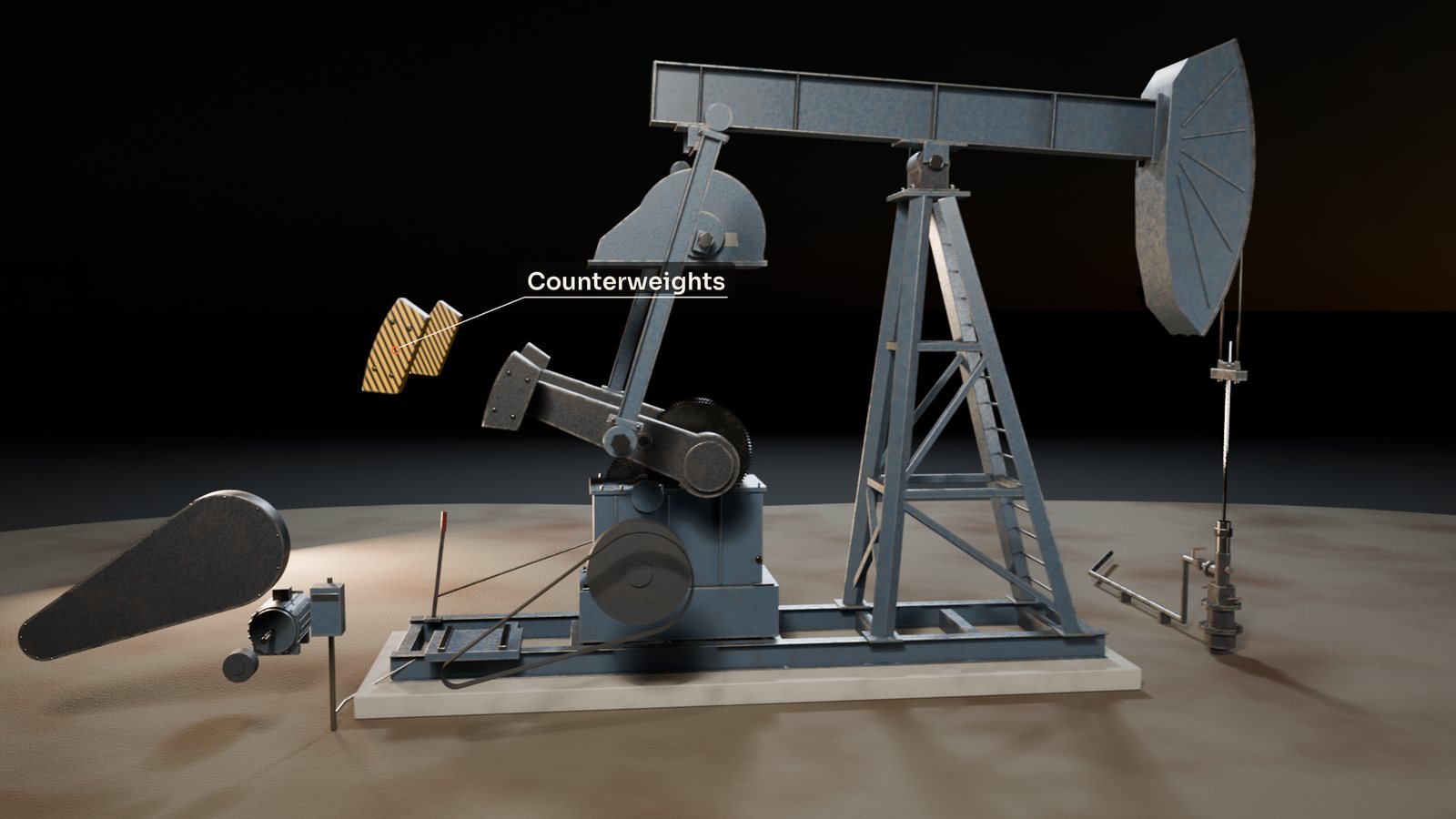
A beam pumping unit, the pumpjack you see nodding in fields all over Louisiana. The film opens on one running at sunset. The brake sets, the field drops away to a dark stage, and the unit comes apart in the order you would explain it: the drive first (motor, belts, sheaves, brake and the gearbox cover), then the counterweights, cranks and pitman arms. The walking beam rocks on its pivot so you can see how the horsehead keeps the line straight over the well, then the beam, horsehead and saddle come off too.
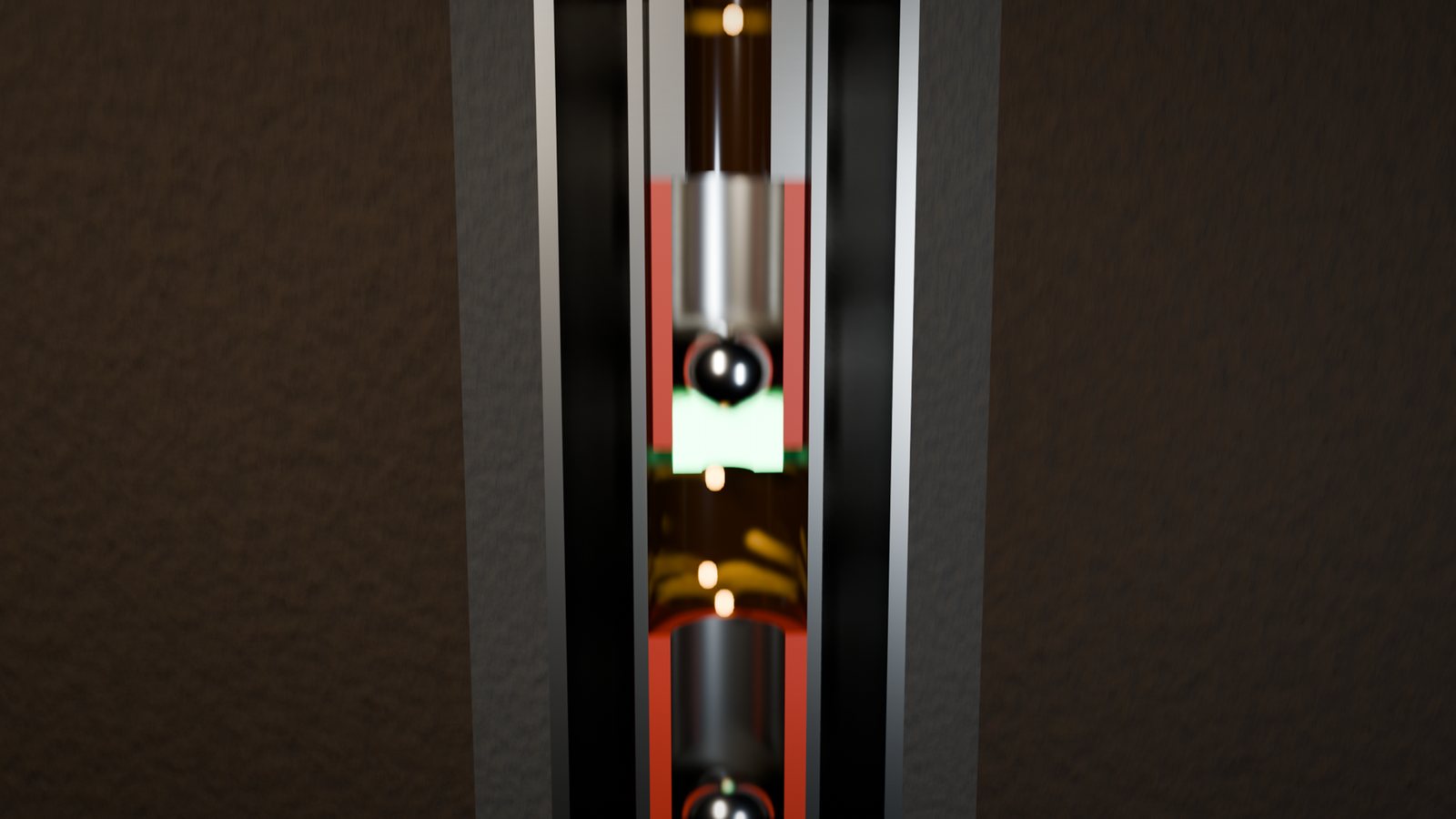
Everything snaps back together and the camera drops down the well to the pump at the bottom. A half-section shows the traveling valve and the standing valve trading places on every stroke: one closes and lifts the oil while the other opens and lets more in.
It is a concept I built on my own. It is not any maker's unit and carries no brand. Three things are drawn on purpose so you can follow them: the well is far shorter than a real one, the parts down the hole are drawn twice their real width, and the downhole part plays at half speed.
How it was made
- ModelEvery part that moves or comes off is its own object, from the motor and belts to the horsehead and carrier bar, plus the pump at the bottom: the plunger, both valve balls and seats, the tubing and casing around them, and the rod string with its couplings.
- MotionThe beam angle is worked out from the crank angle on every frame, so the horsehead moves exactly the way the gearbox turns it. The gearbox is 30 to 1 and the stroke is 121 inches. 16 parts come off in three groups, timed to the narration.
- CheckedEvery frame of the pump was checked against the stroke: the traveling valve is never open on the upstroke and the standing valve is never open on the downstroke.
- Labels8 labels, one on screen at a time, each tied to its part's position in every frame.
- SoundNarration is a synthetic voice made with ElevenLabs. Music by Lexin_Music on Pixabay. The machine sounds are made in code.
- Render1,350 frames in Blender EEVEE at 30 frames a second, about 2.5 seconds a frame on average on one graphics card. About 56 minutes in all.
Stills from the render